Each glossary is built for a specific making discipline or business stage — with definitions written for the workbench and the boardroom, not the chemistry lab. Click through to the full glossary or use the A–Z jump nav above to find any term directly.
🕯️
Candle Maker Glossary
From your first pour to burn testing at scale — every term that matters in candle making, including wax types, wick sizing, fragrance load, cure time, and troubleshooting vocabulary.
Hot Throw
Melt Pool
Fragrance Load
Cure Time
Wooden Wick
Tunneling
Browse the full Candle Glossary
🧼
Soap Maker Glossary
Cold process, hot process, and melt & pour — all the terms you need to understand saponification, lye safety, trace, superfat, and the chemistry behind a good bar of soap.
Saponification
Cold Process
Trace
Superfat
Lye
Melt & Pour
Browse the full Soap Glossary
🌿
Fragrance Glossary
The language of scent — from fragrance oil fundamentals and IFRA compliance to blending vocabulary, diffusion formats, and the difference between a top note and a base note.
Flashpoint
Phthalate-Free
Scent Throw
IFRA
Fragrance Notes
Reed Diffuser
Browse the full Fragrance Glossary
✨
Bath, Body & Beauty Glossary
Ingredient and formulation terms for makers creating skin care, body care, hair care, and lip products — written for DIY makers and small brand founders, not cosmetic chemists.
Emulsifier
Preservative
pH
Carrier Oil
Active Ingredient
Usage Rate
Browse the full Beauty Glossary
🧺
Laundry & Home Cleaning Glossary
80+ terms for DIY laundry and home cleaning makers — surfactants, castile soap, pH, washing soda, soap nuts, wool dryer balls, functional fragrance, and green cleaning chemistry.
Surfactant
Castile Soap
Washing Soda
Wool Dryer Balls
Soap Nuts
Functional Fragrance
Browse the full Laundry & Cleaning Glossary
🫙
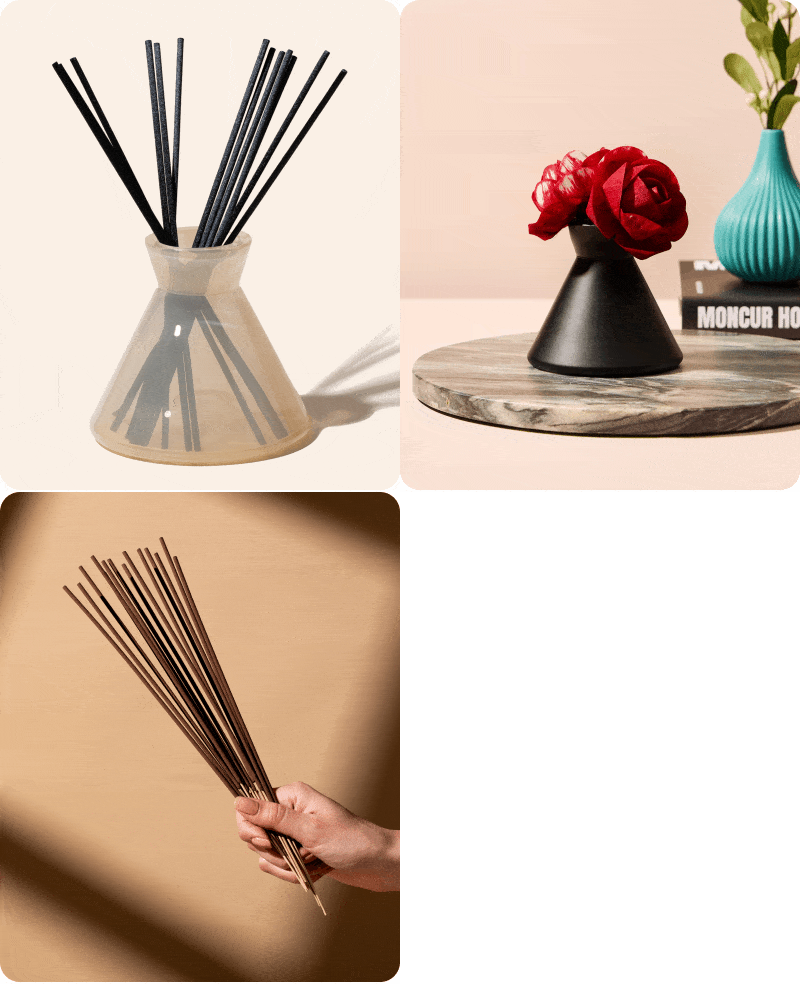
Diffuser & Incense Glossary
80+ terms for reed diffuser and incense makers — diffuser bases, rattan reeds, sola flowers, DPG, VOCs, fragrance load ratios, incense sticks and cones, and scentable beads.
Reed Diffuser
DPG
Rattan Reed
Cold Throw
VOC
Incense Cone
Browse the full Diffuser & Incense Glossary
📦
Candle & Soap Business Glossary
The commercial vocabulary of running a product-based maker business — pricing, profit margins, sales channels, wholesale, branding, legal compliance, shipping, and the full makesy ecosystem explained plainly.
COGS
Keystone Pricing
Wholesale
makerpro
LLC
MadeBetter™
Browse the full Business Glossary
🏭
Wholesale & Business Glossary
The complete commercial vocabulary for scaling makers — sourcing, manufacturing models, product development, pricing strategy, retail channels, operations, finance, and legal compliance for home fragrance and beauty brands.
MOQ
Private Label
Gross Margin
3PL
LTV
Planogram
Browse the full Wholesale Glossary