









best candle vessels for maximum scent throw: glass vs ceramic vs metal
Candles go way beyond just filling a room with a nice smell. The moment you light one, there is an instant shift in the atmosphere. The warmth, the flicker, the scent slowly making its way through your space. It is a whole experience, and when it is done right, it really does make your day.
But here is something most people never stop to think about: what role is the vessel actually playing in all of that?
When it comes to creating a candle that truly fills a room with fragrance, the vessel you choose matters more than most people realize. It shapes your burn performance, your scent throw, and the experience your customer has every time they light up. Glass, ceramic, or metal? This guide breaks it all down so you can make the right call for your brand or your next DIY project while understanding which candle vessel gives the best scent throw.
does choosing the candle vessel actually matter?
Your vessel is not just a pretty home for your wax. It is an active part of the burn system. Scent throw depends on how effectively heat melts wax and releases fragrance oils into the air. The vessel directly influences heat distribution, melt pool formation, burn temperature, and how fragrance diffuses through the room. Better heat control means better scent throw. It really is that connected.

glass candle jars: the industry classic
There is a reason glass candle jars for candle making are the go-to choice for makers everywhere. Glass Vessel is non-porous, so it does not absorb any of your fragrance over time. Every bit of scent stays locked in the wax right where it belongs until it is time to burn.
Glass jars never fail to create a beautiful look for your candle. You can watch the melt pool develop, spot air bubbles during your pour, and monitor glass adhesion while testing a new formula. That transparency is genuinely useful when you are dialling in a new recipe.
From a scent throw perspective, glass is a steady, neutral conductor. It does not heat up aggressively, which means the melt pool builds at a calm, controlled pace and delivers consistent, reliable fragrance release from the first burn to the last. Pair that with the right candle vessels in the right diameter and you have a combination that is really hard to beat for everyday container candles.
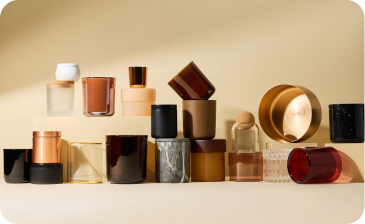
With a clear, frosted, amber, and matte coated look, you are going for minimalist or luxe, which glass can pull it off. Just watch out for breakage during shipping. Thicker-walled jars help, and matching your wax volume to your jar size keeps thermal shock risk low.

for luxury upgrade- perfect ceramic vessels the premium option
If you want your candles to feel truly luxurious, ceramic candle vessels are where it is at. The weight, the texture, the way a matte glaze catches the light. It takes a candle from a home fragrance item to a genuine lifestyle object, and that is a powerful thing for your brand.
Performance-wise, ceramic is one of the most heat-retentive materials you can work with. It distributes heat evenly across its walls, reducing hot spots and helping your melt pool stay stable throughout the burn. That is exactly why the heat-retentive ceramic candle has become such a favorite in the luxury and spa space.
The scent thrown from ceramic feels rich and sustained. It never fails to hold warmth longer and also, it distributes it so evenly, the fragrance releases at a steady, generous rate rather than spiking and fading. For complex or layered fragrances, ceramic is often the better call over glass. But, ceramic is heavier, pricier, and more fragile than metal. For large-scale production it may not be practical across the board. But for a premium collection or signature product, it absolutely earns its place. Customers also love repurposing ceramic jars once the candle is done, which keeps your brand in their space long after the last burn.

portable and practical option- metal candle tins
Metal tins are lightweight, practically indestructible in transit, and significantly more affordable than glass or ceramic. If you are building a travel candle line, a gift set, or an entry-level product, metal makes a really strong case, especially when comparing the candle tins vs glass jars.
On the scent throw side, metal conducts heat quickly. That is, the wax reaches burning temperature faster and delivers a quicker initial scent hit. The tradeoff is that metal does not distribute heat as evenly as ceramic, and thinner-walled tins can get quite warm on the outside during a burn.
In the metal vs glass heat conduction candle comparison, it comes down to speed versus control. Metal heats fast, glass heats steadily, ceramic holds heat longest. A well-designed label and quality lid go a long way toward making a tin feel premium, but the material has a natural ceiling when it comes to luxury positioning.
glass vs ceramic vs metal
|
factor |
glass |
ceramic |
metal Tin |
|---|---|---|---|
|
Scent Throw |
Consistent |
Rich and sustained |
Fast and intense |
|
Heat Conduction |
Moderate |
Even and retentive |
Fast |
|
Durability in Shipping |
Moderate |
Moderate to low |
Highest |
|
Price Point |
Mid range |
Higher |
Most affordable |
|
Brand Positioning |
Flexible |
Luxury and premium |
Casual and travel |
|
Reusability |
Moderate |
High |
Low to moderate |
does your vessel match the candle you are trying to make?
Every great candle is a result of great work of systems that happens behind. The wax, the wick, the fragrance, and the vessel all have a role to play. When one piece is off, the whole experience can fall short no matter how good everything else is.
At makesy, we are here to help you make those decisions with confidence. Browse our full range of candle vessels and pair them with fragrance oils formulated to perform in your specific wax type. That is where the magic really happens.
We love seeing what you create! Tag us @makesy on Instagram or @makesyofficial on Facebook for a chance to be featured.
Happy making!


